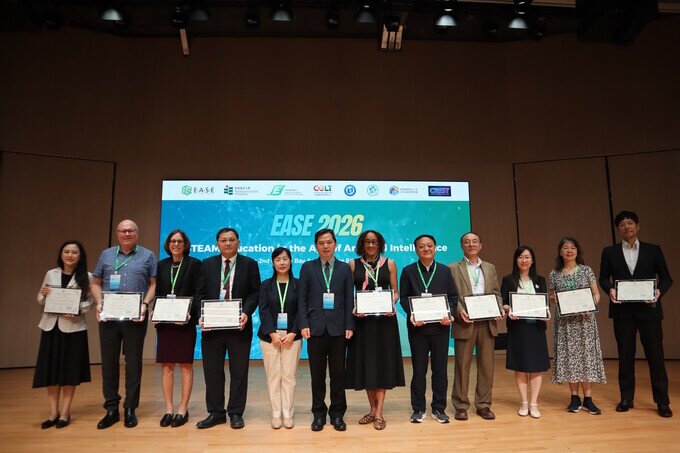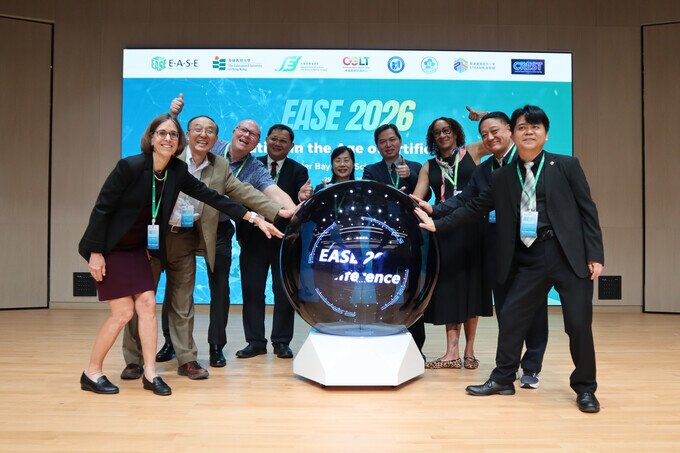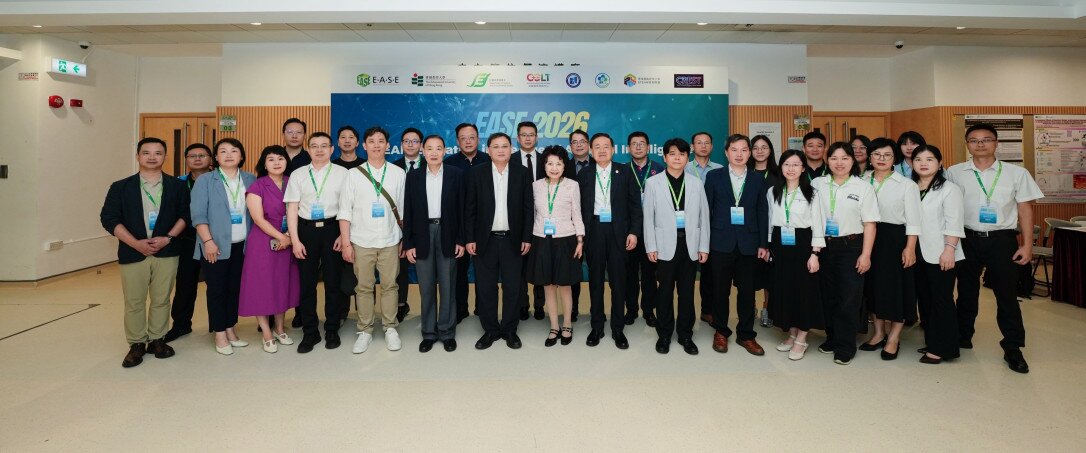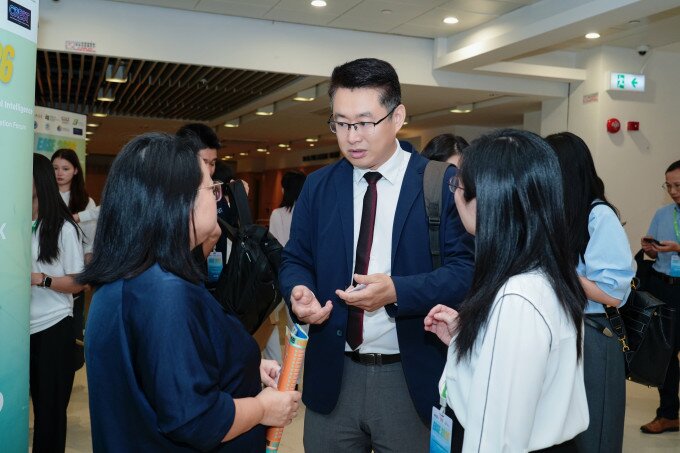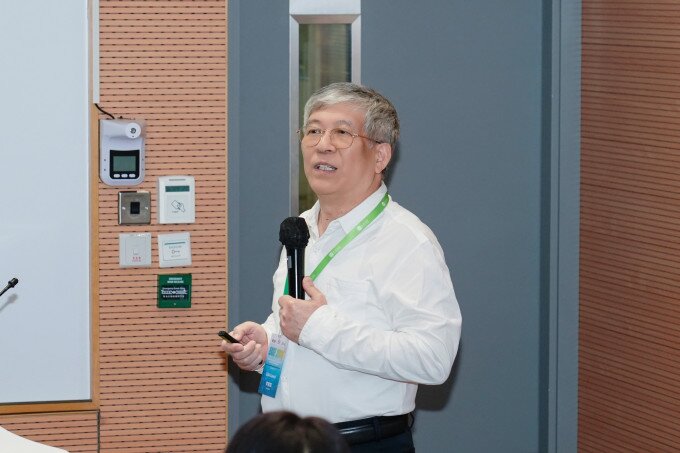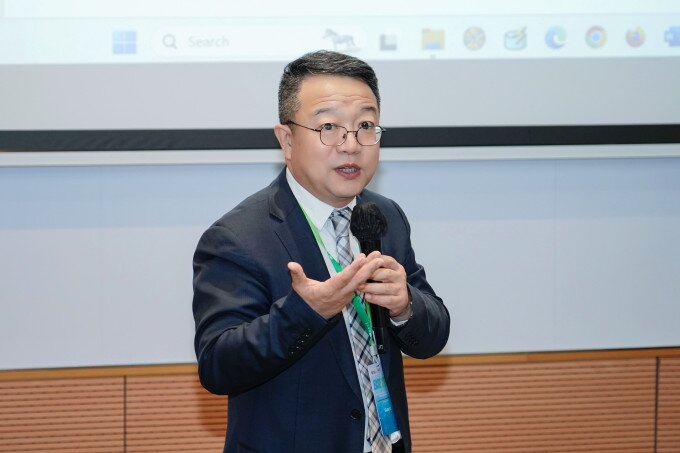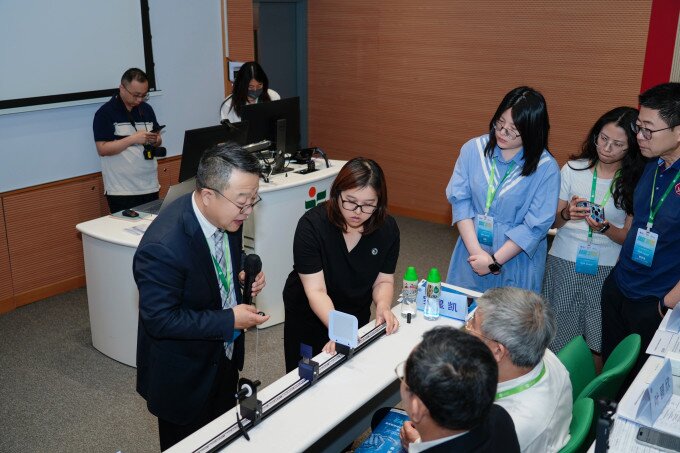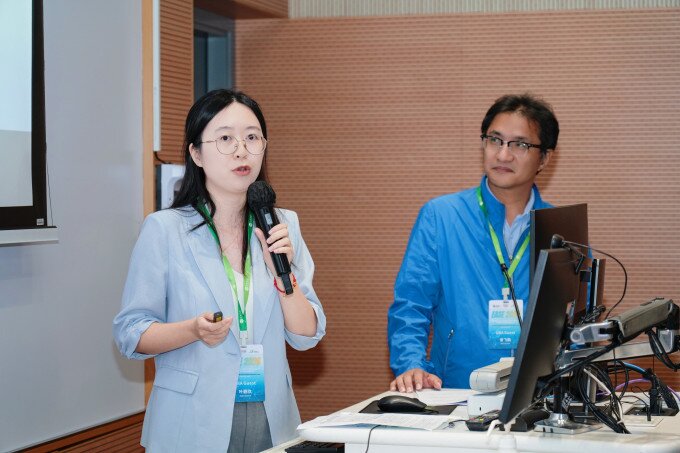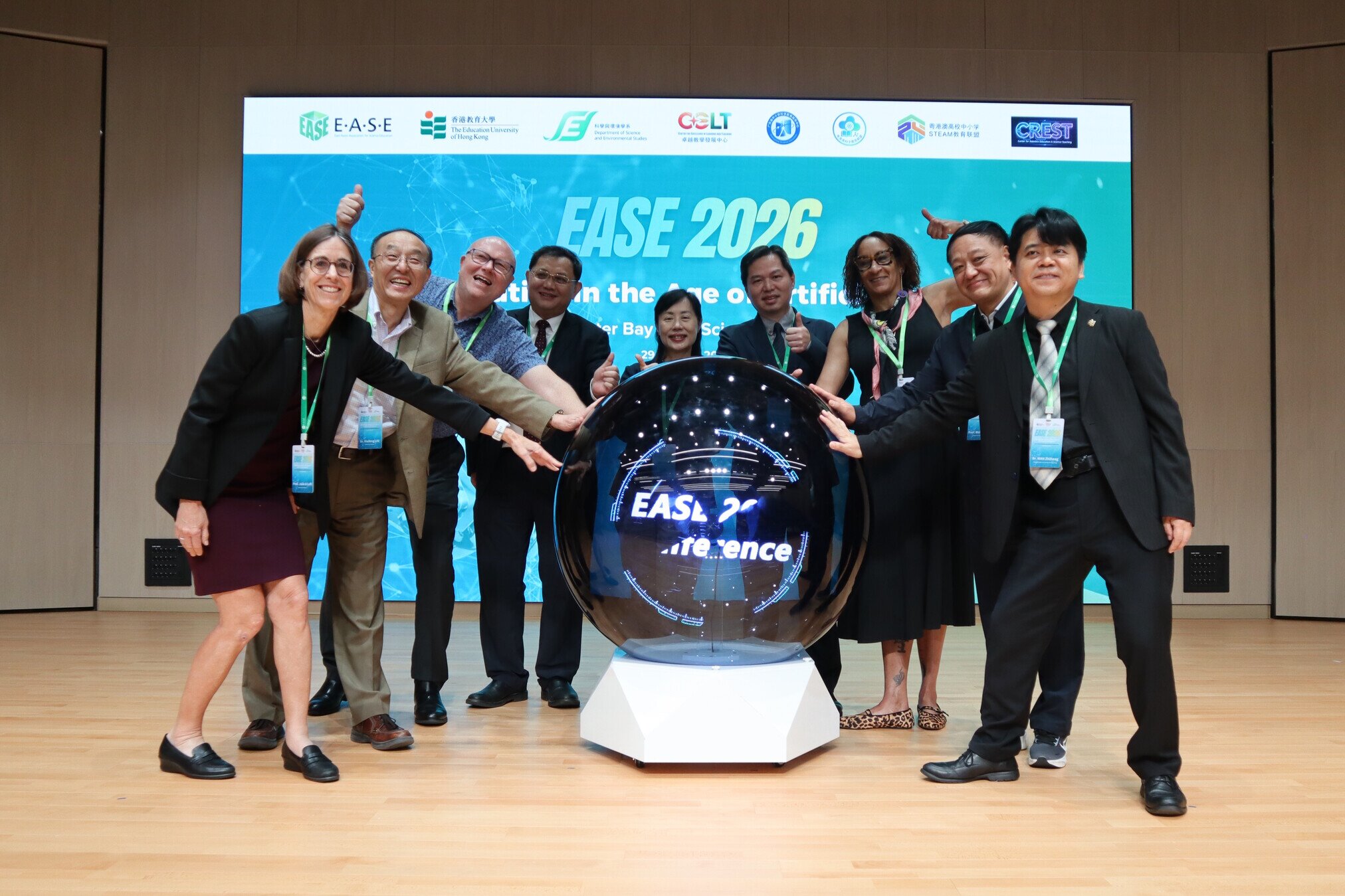
The Education University of Hong Kong (EdUHK) successfully hosted the 2026 International Conference of the East-Asian Association for Science Education (EASE) on its Tai Po campus from 29 to 30 May. Under the theme “STEAM Education in the Age of Artificial Intelligence”, the conference brought together leading experts, early-career researchers, educators, and policymakers from East Asia and beyond to explore how artificial intelligence is reshaping STEAM education.
The conference was supported by the Guangdong Provincial Guidance Center for Primary and Secondary School Subject Education, and numerous universities and professional organisations. It attracted over 400 participants from across the globe.
Opening Ceremony
The opening ceremony was held on the morning of 29 May. Professor May May Hung Cheng, Vice President (Academic) of EdUHK and Chair of the EASE 2026 Conference, delivered the welcome address. She emphasised that STEAM education plays a crucial role in building a sustainable future. “In recent years, East Asian societies have witnessed a new wave of STEAM curriculum reforms,” Professor Cheng said. “This conference aims to provide a platform for scholars from around the world to share their insights and inform the current tide of STEAM education reform.”
Dr. Zhihong Wan, President of the East-Asian Association for Science Education and also from EdUHK, highlighted the Association’s mission to enhance science education in East Asia through academic exchange and practice sharing. He expressed his hope that the conference would generate novel research questions and new theoretical frameworks.
Professor Enke Wang, Director of the Guangdong Provincial Guidance Center for Primary and Secondary School Subject Education, was invited to officiate. He stressed the importance of collaborative innovation in science education across the Greater Bay Area and noted that under the national strategy of “Invigorating the Country through Science and Education”, deepening cross-regional cooperation will help cultivate innovative talents.
Keynote and Invited Speeches
The two-day conference featured five keynote addresses and a series of invited speeches delivered by distinguished scholars from leading universities worldwide.
Keynote speakers included:
- Professor Jennifer Adams (University of Calgary, Canada): “Thinking With AI: What Should Science Education Cultivate in the Age of Artificial Intelligence?”
- Professor Julie A. Luft (University of Georgia, USA): “Consequential STEM Teacher Education in a Time of Change: The Potential and Promise of Newly Hired Teachers”
- Professor Weiping Hu (Shaanxi Normal University, China): “Focus on the Effective Cultivation of Innovative Talents to Achieve High-Quality Development of STEAM Education”
- Professor James Davis (Queensland University of Technology, Australia): “STEAM Education in the Age of AI: A Human Capabilities Approach”
- Professor Xiufeng Liu (University of Macau, Macau): “Promoting STEM Literacy in K-12 Science Education”
Invited speakers included:
- Professor Zehui Zhan (South China Normal University, China): “Artificial Intelligence in Interdisciplinary Education”
- Professor Ryugo Oshima (Chiba University, Japan): “Beyond ‘Knowing and Doing’ in Science Education: Reclaiming Scientific Inquiry as a Human Enterprise from the Perspective of Japanese STEAM Education”
- Professor Sheau-Wen Lin (National Pingtung University, Taiwan): “Building a Sustainable STEAM Education Ecosystem in Elementary Schools of Rural Southern Taiwan: The ‘Three Teachers + C’ Co-Learning Model”
- Professor Hadi Suwono (Universitas Negeri Malang, Indonesia): “Improving Science Literacy through Local Wisdom-Based Citizen Science in Indonesia”
- Professor Chanyah Dahsah (Srinakharinwirot University, Thailand): “The Effect of Teachers’ Use of Artificial Intelligence for Designing Science Learning on Students’ Scientific Literacy”
Parallel Sessions and Greater Bay Area Forums
The conference also hosted numerous parallel sessions covering a wide range of topics, including AI-assisted teaching and assessment, science/STEM identity, education for sustainable development, inquiry-based and project-based learning, interdisciplinary competence, textbook analysis, and student epistemic interaction with AI.
A special highlight was the Greater Bay Area Science Education Forum, which expanded to seven sessions conducted in Chinese. Experts, scholars, and renowned teachers from Guangdong, Hong Kong, Macau, and other Greater Bay Area cities gathered to share teaching experiences, discuss collaborative innovation in science education development, and strengthen the integration of research and practice. One of the forums was held online, in conjunction with the Conference of the Alliance for Improving Scientific Literacy, further extending the reach of the dialogue.
For more details about the event, please visit the conference website: https://ease2026.eduhk.hk/index.php/agenda/